2026 Key Celestial Events
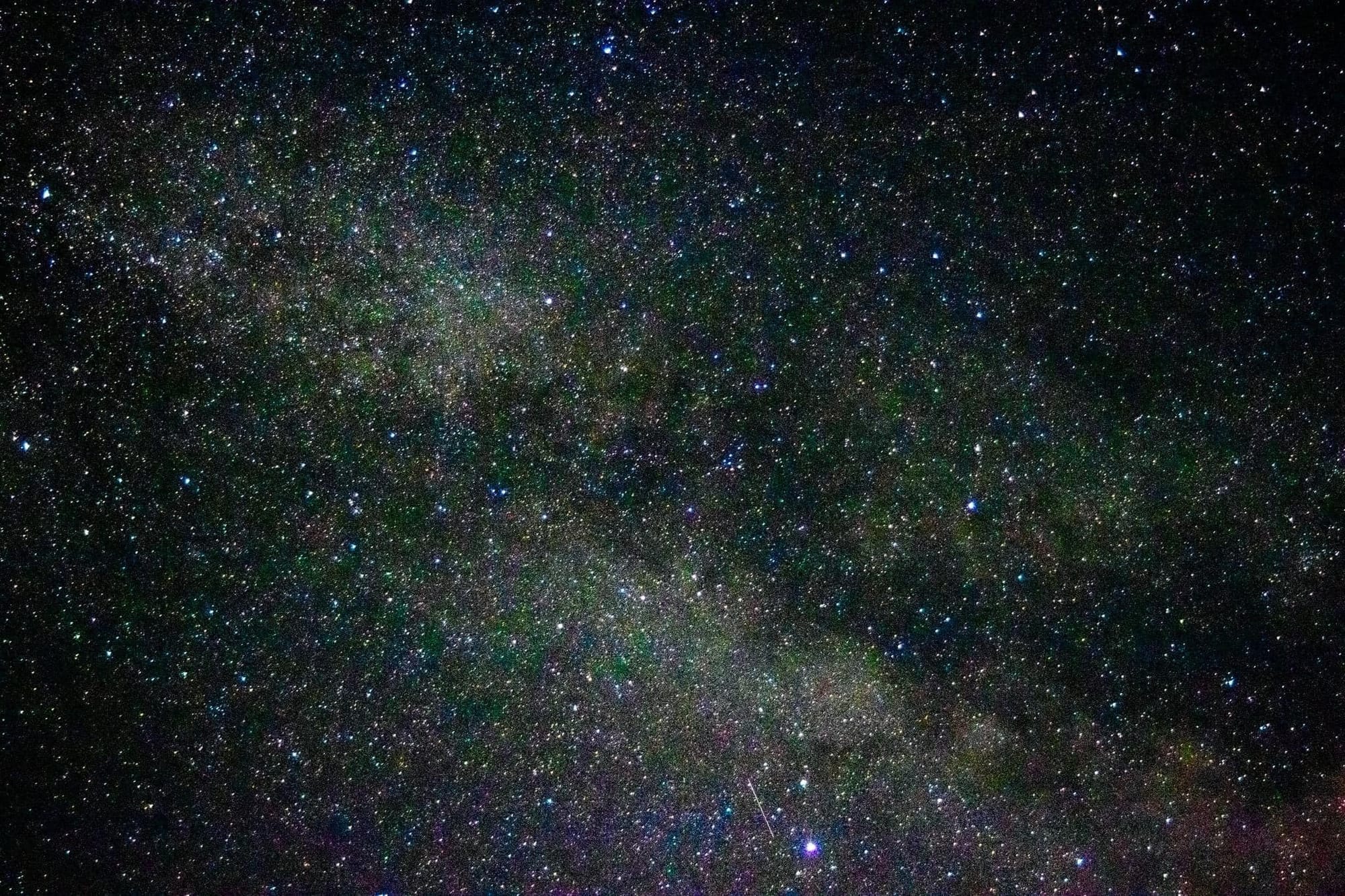
Here are key celestial events in 2026 for your consideration while you plan your vacation or getaway!
Best stargazing is done at New Moon phases (including few days before and after).
Your Dark Sky Destinations hosts have more information and details for almost every day of the year. This information is provided upon arrival.
JANUARY 2026
January 3–4 — Quadrantid Meteor Shower peak; best viewed after midnight until dawn, one of the year’s sharpest but brief meteor peaks.
January 3 — Full Moon (Wolf Moon / Supermoon), near lunar perigee, appearing slightly larger and brighter than average.
January 10 — Jupiter at opposition; Jupiter rises at sunset, shines at maximum brightness, and is visible all night.
January 23 (evening) — Moon–Saturn conjunction; the Moon passes close to Saturn low in the western sky after sunset.
Late January (evenings) — Orion Nebula and winter Milky Way prime viewing during long dark nights.
FEBRUARY 2026
February 17 — New Moon; darkest skies of the month for deep-sky observing.
February 19 (after sunset) — Mercury at greatest eastern elongation; best evening appearance of Mercury in 2026.
Throughout February — Venus dominates the evening sky, bright and unmistakable after sunset.
Late February (pre-dawn) — Saturn begins transitioning toward morning visibility.
MARCH 2026
March 3 (late evening–early night North America) — Total lunar eclipse; a “Blood Moon” visible across most of North America.
March 3 — Full Moon (Worm Moon) coinciding with the total lunar eclipse.
March 19 — New Moon; excellent dark-sky window.
March 20 (morning) — March equinox; astronomical start of spring in the Northern Hemisphere.
Late March (evenings) — Venus and Jupiter remain bright evening planets.
APRIL 2026
April 13–15 (pre-dawn) — Comet C/2025 R3 (PanSTARRS) potential naked-eye visibility window (brightness uncertain).
April 22–23 (late night–dawn) — Lyrid Meteor Shower peak; fast, bright meteors under usually favorable skies.
Late April — Mercury passes inferior conjunction, shifting into the morning sky.
Late April — New Moon; deep-sky observing window.
Late April (evenings) — Venus and Jupiter draw closer, building toward their June conjunction.
MAY 2026
May 6 (pre-dawn) — Eta Aquariid Meteor Shower peak; best from southern latitudes but still visible from North America.
Mid-May — New Moon; excellent galaxy and nebula viewing.
Late May — Comet 24P/Schaumasse near perihelion, visible with binoculars or small telescopes.
May 31 — Blue Moon (second full Moon in May).
Late May (evenings) — Jupiter remains prominent after sunset.
JUNE 2026
June 9 (after sunset) — Venus–Jupiter conjunction; one of the most striking planetary pairings of the year.
June 19 (after sunset) — Venus near the Beehive Cluster (M44); excellent wide-field binocular and imaging target.
June 20 — New Moon; darkest skies during short summer nights.
Late June (late night) — Milky Way core becomes visible in darker southern skies.
Throughout June — Saturn rises earlier, becoming a late-evening target.
JULY 2026
Early July — Saturn well-placed for late-night observing, rings visible in small telescopes.
Mid-July — New Moon; prime Milky Way season begins.
Late July (after midnight) — Milky Way core at peak seasonal visibility.
July 29 (late night–dawn) — Delta Aquariid Meteor Shower peak.
Throughout July — Mars steadily brightens, setting up its late-year prominence.
AUGUST 2026
August 12 — Total solar eclipse (totality in Europe/Greenland; partial visibility in eastern Canada).
August 12–13 (late night–dawn) — Perseid Meteor Shower peak; one of the year’s best meteor displays.
Mid-August — New Moon; outstanding dark-sky conditions.
August 28 (night) — Partial lunar eclipse visible across much of North America.
Late August (evenings) — Mars and Saturn both well placed for observing.
SEPTEMBER 2026
Early September (late night) — Saturn approaches opposition, visible nearly all night.
Mid-September — New Moon; ideal for galaxies and nebulae.
September 22 — September equinox; astronomical start of autumn.
Late September (evenings) — Andromeda Galaxy prime visibility.
Late September — Cooler nights improve planetary seeing conditions.
OCTOBER 2026
October 4 — Saturn at opposition; brightest and best Saturn viewing of the year.
October 5 (evening) — Moon–Mars conjunction.
Mid-October — New Moon.
October 21–22 (late night) — Orionid Meteor Shower peak.
Late October (after sunset) — Mercury evening apparition.
NOVEMBER 2026
November 14–16 (pre-dawn) — Mars–Jupiter conjunction; dramatic close planetary pairing.
Mid-November — New Moon.
November 17 (late night–dawn) — Leonid Meteor Shower peak.
November 24 — Full Moon (Beaver Moon / Supermoon).
Late November (pre-dawn) — Mercury morning visibility improves.
DECEMBER 2026
December 13–14 (all night) — Geminid Meteor Shower peak; the year’s most reliable and rich meteor display.
Mid-December — New Moon; excellent winter deep-sky observing.
December 21 — December solstice; longest night of the year in the Northern Hemisphere.
December 21–22 (late night) — Ursid Meteor Shower.
December 24 — Full Moon (Cold Moon / Supermoon), one of the closest full Moons of 2026.